Paper Trading Prototype

Daytrader Paper Bot

A paper-trading research dashboard for testing liquidity-sweep and FVG-style setups.

Educational only. This is a prototype for learning and research. Not financial advice. No guarantee of performance.

Features

What the dashboard provides for paper-trading research.

📊

Live Paper-Trading Dashboard

Electron desktop app with real-time candlestick chart, VWAP/EMA20 overlays, prior-day levels, and session stats.

👁️

Multi-Symbol Watchlist

Track SPY, QQQ, IWM, major tech and index ETFs simultaneously with one-click symbol switching.

Liquidity Sweep / BOS / FVG Scanner

Concept-level scan for liquidity sweeps, break-of-structure (BOS), and fair-value gap (FVG) retracement setups on completed one-minute bars.

📐

Technical Context Filters

VWAP, EMA20, opening-range high/low, and prior-day high/low levels are plotted as reference overlays.

🛡️

Paper Order Guardrails

One trade per symbol, one per day per symbol, max open positions, bracket-order preference, and configurable no-trade window.

🔌

Alpaca Paper Account Integration

Connects to Alpaca Markets paper-trading API for live market data and simulated order execution.

💰

Dynamic Position Sizing

Choose between fixed dollar per trade or a percentage of paper equity. Stop distance and risk-reward ratios are configurable.

📋

Trade & Session Summaries

Track per-session win/loss counts, net P&L, positions count, and a real-time event log.

Dashboard Preview

The Electron dashboard running with paper-market data.
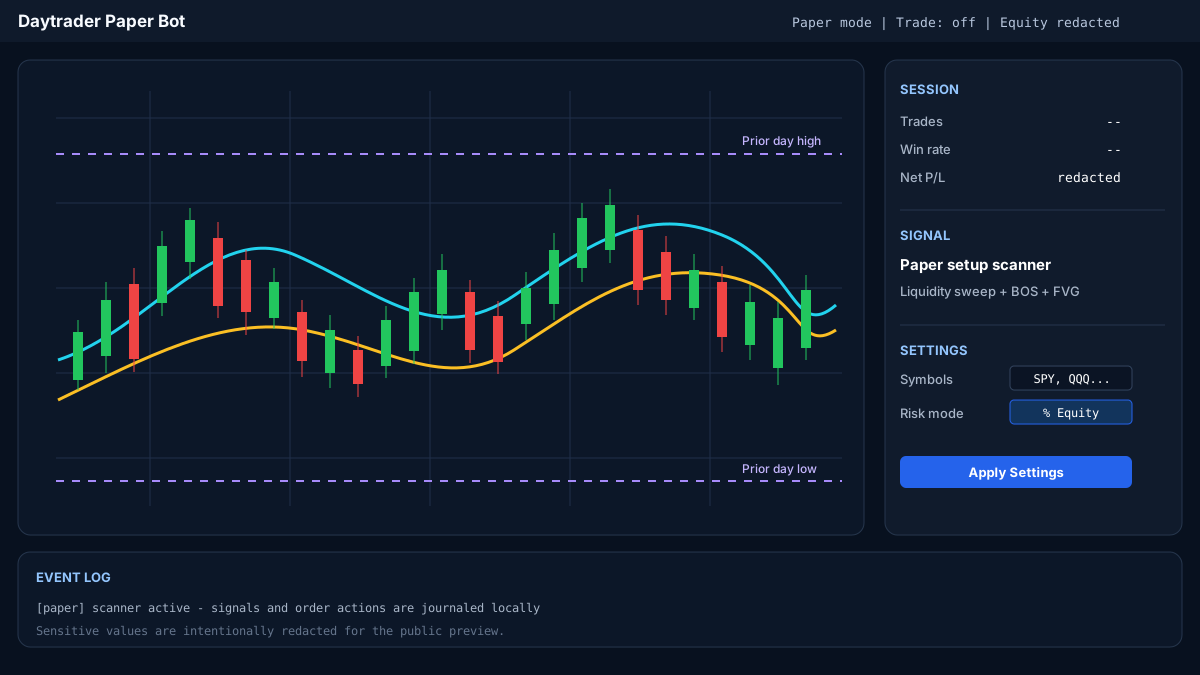
Main dashboard with candlestick chart, VWAP/EMA20 overlays, and side panel showing session stats, signal info, and settings.
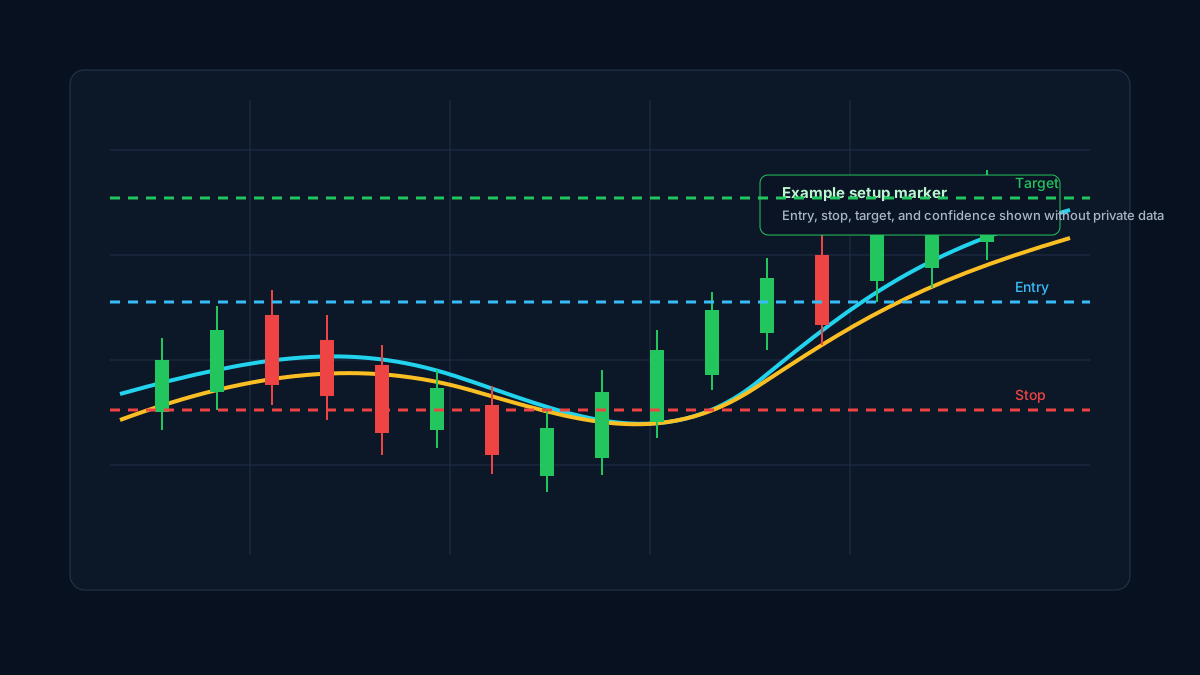
A detected liquidity-sweep / FVG signal shown with entry price, stop-loss, and projected target lines on the chart.
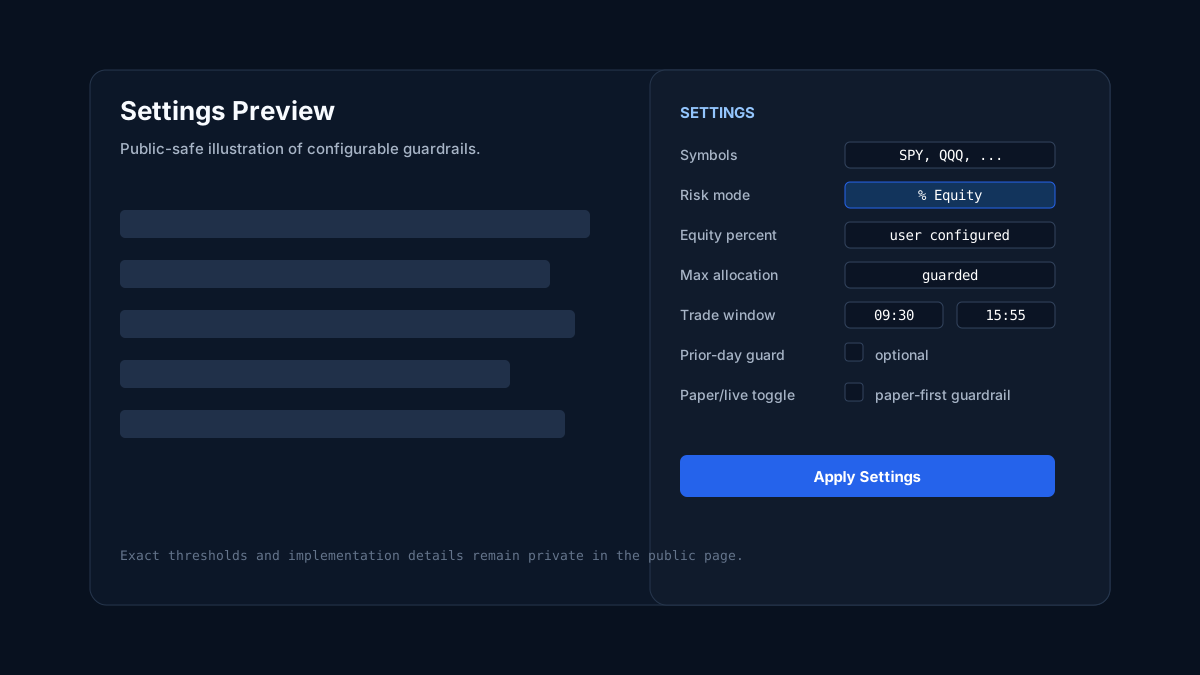
Settings area showing symbol selection, risk-mode toggle (fixed $ / % equity), max dollar per trade, equity percent, stop distance, and R:R ratio.

View full screenshot gallery →

How It Works

A high-level overview of the paper bot's data flow.

  1. Market data enters the watcher. The Python backend polls Alpaca's market-data API for recent bars and real-time quotes for each configured symbol.
  2. Strategy scans completed one-minute bars. Each completed bar is evaluated for liquidity-sweep, break-of-structure, and fair-value gap patterns using price action and volume context.
  3. The dashboard shows live chart overlays and blockers. The Electron frontend renders candlesticks, VWAP, EMA20, opening range, prior-day levels, and any detected watch-zones or confirmed signals.
  4. Paper orders are only submitted if risk guards pass. Before any simulated order, the bot checks position limits, per-symbol daily trade counts, max notional, and time-window rules.
  5. The app records session/account state. Journal entries log every signal, guardrail rejection, and order submission for later review.

Read the detailed explanation →

Safety Design

Built for paper-first research with guardrails at every step.

Paper-first by default. The bot is designed exclusively for Alpaca's paper-trading environment. Live trading is intentionally unsupported in this scaffold.
  • One open trade per symbol — stacking multiple trades in the same symbol is blocked.
  • One trade per symbol per day — prevents re-entering the same instrument after a fill.
  • Max open positions — a configurable cap on simultaneous position count.
  • Max notional / percent-equity sizing — position size is bounded either by a fixed dollar amount or a percentage of paper equity.
  • Bracket order preference — stop-loss and take-profit orders are attached at submission.
  • Configurable no-trade window — avoids the late-morning chop period (default 10:00–11:30 ET).
  • Live mode is guarded — an explicit flag must be enabled, and even then the same risk limits apply.

Read the risk and safety guide →

What Is Not Published Here

This public site is a showcase of concepts only. The following are intentionally kept private:

  • Source code — the full Python and JavaScript implementation is not included on this public site.
  • API credentials — Alpaca API keys, secret keys, and account identifiers are never published.
  • Exact strategy implementation — the specific thresholds, filtering logic, and order-routing decisions are not disclosed.
  • Raw logs and trade data — session logs, backtest results, and paper-trading records remain local.
  • Backtest files — raw backtest runs and performance files are not included.